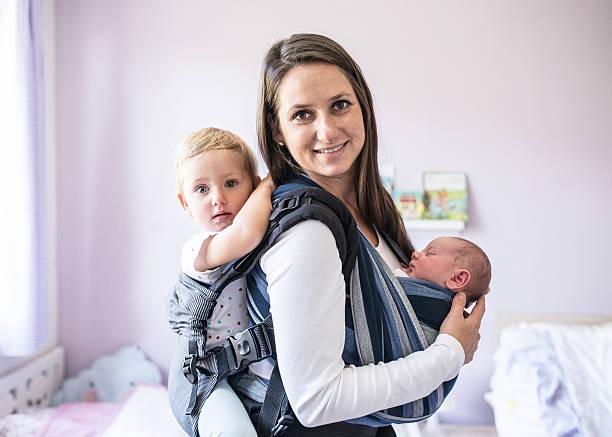

The Science of Babywearing: Stimulating Infant Brain Development
When most parents think of a baby carrier, they view it primarily as a convenient transportation tool. However, extensive pediatric research reveals that babywearing is a profound catalyst for cognitive and neurological growth. The physical closeness provided by a carrier creates a rich sensory environment that actively stimulates an infant’s rapidly developing brain. By integrating the baby into the caregiver’s daily movements, the carrier transforms everyday routines into dynamic learning experiences, laying the foundation for advanced cognitive functions, emotional regulation, and spatial awareness.
Activating the Vestibular System
The vestibular system, located in the inner ear, is responsible for regulating balance, spatial orientation, and muscle tone. When a baby is worn in a carrier, they are subjected to a continuous stream of subtle, rhythmic movements as the caregiver walks, bends, and sways. This constant motion provides critical proprioceptive feedback, accelerating the maturation of the vestibular system. Unlike lying static in a crib or a stroller, the dynamic environment of a carrier forces the infant’s brain to constantly process gravitational changes. This early stimulation is directly linked to improved motor skills, earlier achievement of physical milestones like crawling and walking, and an enhanced sense of physical security in their environment.
Accelerating Language Acquisition and Social Cues
Language development is heavily dependent on exposure, and a baby carrier places an infant at the optimal height for linguistic immersion. Positioned on the caregiver’s chest, the baby is in the direct line of sight and hearing for all conversations. This proximity allows them to closely observe facial expressions, lip movements, and tonal variations. Furthermore, caregivers who wear their babies are statistically more likely to engage in continuous dialogue with them, narrating their day and responding to the baby’s micro-cues. This constant auditory and visual feedback loop strengthens neural pathways associated with communication, significantly boosting early vocabulary comprehension and social-emotional intelligence.
To better understand how different carrying positions influence cognitive growth, consider the following developmental breakdown:
| Carrying Position | Optimal Age Range | Primary Cognitive & Neurological Benefits |
|---|---|---|
| Inward-Facing (Front) | 0 – 6 Months | Enhances emotional security, regulates heart rate via skin-to-skin contact, and promotes deep auditory processing of the caregiver’s voice. |
| Outward-Facing (Front) | 6 – 12 Months | Stimulates visual cortex, encourages environmental observation, and aids in understanding spatial depth and object permanence. |
| Back Carrying | 12+ Months | Provides a panoramic view of the world, fostering independent observation while maintaining physical reassurance and advanced balance coordination. |

Taming the Clingy Phase: Managing Separation Anxiety
Separation anxiety is a natural, albeit exhausting, developmental milestone that typically emerges between 6 to 8 months of age. During this period, infants develop the concept of object permanence—the understanding that people and objects continue to exist even when they cannot be seen. While this is a massive cognitive leap, it triggers intense panic when their primary caregiver leaves their line of sight. Baby carriers serve as an incredibly effective intervention tool during this clingy phase, offering a psychological safety net that mitigates stress hormones and fosters secure attachment.
Understanding the Cortisol Reduction Mechanism
When an infant experiences separation anxiety, their brain triggers the release of cortisol, the body’s primary stress hormone. Prolonged exposure to high cortisol levels can disrupt sleep patterns, digestion, and overall emotional stability. Utilizing a baby carrier instantly counteracts this physiological stress response. The physical pressure of the carrier, combined with the warmth of the caregiver’s body, the rhythm of their heartbeat, and the familiar scent, triggers the release of oxytocin—the “love hormone.” This biochemical shift rapidly lowers cortisol levels, shifting the baby’s nervous system from a state of “fight or flight” back into “rest and digest.”
Building Secure Attachment Through Proximity
Psychological studies consistently show that infants whose needs are met promptly and consistently develop a “secure attachment” style. Paradoxically, the best way to foster future independence is by fully satisfying an infant’s need for dependence. By using a baby carrier during peaks of separation anxiety, caregivers send a clear, neurological signal to the baby: “You are safe, and I am here.” This constant reassurance builds a deep reservoir of trust. As the baby’s confidence in the caregiver’s availability solidifies, the intensity and duration of their clingy episodes gradually diminish, allowing them to confidently explore their environment when they are ready.
Implementing a baby carrier to manage anxiety requires a strategic approach. Here are foundational steps to ease the transition for a highly anxious baby:
- Start During Calm Periods: Introduce the carrier when the baby is well-rested and fed, not during a full-blown meltdown. This associates the carrier with peace rather than panic.
- Utilize the “Kangaroo Care” Method: For severe anxiety, strip the baby down to their diaper and wear them bare-chested. This skin-to-skin contact maximizes oxytocin production.
- Maintain Continuous Movement: Anxious babies rarely settle in a static carrier. Employ gentle bouncing, walking, or swaying to engage their vestibular system and distract their anxious mind.
- Gradual Desensitization: Use the carrier while moving around the house, occasionally stepping out of the room for a few seconds while narrating your actions, slowly teaching them that you always return.

Parenting’s Secret Weapon: 10 Unexpected Uses of Baby Carriers
Beyond neurological development and anxiety management, a high-quality baby carrier is the ultimate multi-tool in a parent’s arsenal. Many caregivers purchase a carrier for walks or outdoor excursions, only to discover that its true value lies in solving complex, everyday parenting dilemmas. By keeping your hands free and your baby secure, a carrier unlocks a level of domestic and logistical efficiency that completely redefines the postpartum experience.
Revolutionizing Daily Routines and Logistics
The practical applications of babywearing extend far beyond simple transportation. A carrier empowers parents to reclaim their autonomy while keeping their infant completely satisfied. This dual-benefit approach is crucial for maintaining parental mental health and ensuring household functionality during the demanding first year of life.
Here is an exhaustive breakdown of the 10 most impactful, unexpected uses for your baby carrier:
- Hands-Free Household Management: From folding laundry and vacuuming to prepping meals (avoiding hot stoves), a carrier allows parents to complete chores while the baby enjoys the rhythmic motion of the activity.
- Navigating Non-Stroller-Friendly Terrain: Whether hiking on rocky trails, walking on sandy beaches, or navigating narrow cobblestone streets while traveling, a carrier eliminates the physical limitations of bulky strollers.
- Discreet and Convenient Nursing: Many structured carriers and ring slings can be easily adjusted to facilitate hands-free breastfeeding on the go, providing privacy and convenience in public spaces without needing to stop your day.
- Gentle Postpartum Exercise: Wearing your baby adds natural, progressive resistance to your daily movements. Walking with a carrier is an excellent, low-impact way to rebuild core strength and cardiovascular health postpartum.
- Soothing Colic and Infant Reflux: Babies suffering from gastroesophageal reflux disease (GERD) or colic benefit immensely from being held upright. A carrier maintains this optimal vertical position, aiding digestion and significantly reducing crying spells.
- Managing Multiple Children: For parents with a newborn and an active toddler, a carrier is a lifesaver. It secures the infant safely to your chest, leaving both hands completely free to hold a toddler’s hand, push a swing, or manage meltdowns.
- Screen-Free Sensory Entertainment: Instead of relying on digital screens or stationary bouncers, placing a baby in a carrier allows them to passively observe the complexities of the real world, providing healthy, organic sensory stimulation.
- Stress-Free Airport Travel: Navigating TSA security, boarding planes, and maneuvering through crowded terminals is exponentially easier when your baby is strapped to your chest, keeping them safe from crowds and freeing your hands for luggage and tickets.
- Skin-to-Skin Temperature Regulation: A mother’s chest can naturally adjust its temperature to warm up a cold baby or cool down an overheated one. A carrier facilitates this biological thermoregulation effortlessly.
- Fostering Partner Bonding: For non-birthing partners who may struggle to bond in the early months, babywearing provides a dedicated, physical way to connect, allowing them to soothe the baby and share the caregiving load effectively.

Choosing and Using Your Baby Carrier Effectively
To unlock the myriad benefits of babywearing, it is absolutely imperative to use the carrier correctly. Improper usage not only negates the cognitive and emotional benefits but can also pose severe risks to the infant’s physical development, particularly concerning hip dysplasia and restricted airways. Understanding the biomechanics of safe babywearing ensures that both parent and child experience maximum comfort and security.
The Ergonomic “M” Shape Position
The foundation of healthy babywearing is the ergonomic positioning of the infant’s hips and spine. When placed in a carrier, the baby’s knees should always be positioned higher than their bottom, creating a distinct “M” shape. This deep squat position ensures that the ball of the femur sits perfectly inside the hip socket, actively preventing developmental dysplasia of the hip (DDH). Furthermore, the carrier should support the natural “C” curve of a newborn’s spine, rather than forcing it into an unnaturally straight posture.
Adhering to the T.I.C.K.S. Safety Guidelines
The internationally recognized T.I.C.K.S. rule is the gold standard for babywearing safety. Caregivers should mentally run through this checklist every time they strap their baby into a carrier, regardless of the brand or style. Tight: The carrier must be tight enough to hug the baby close to you, preventing them from slumping down, which can hinder their breathing. In view at all times: You should always be able to see your baby’s face by simply glancing down. Close enough to kiss: The baby’s head should be positioned high on your chest; you should be able to kiss their forehead by tipping your head forward. Keep chin off the chest: Ensure there is always a gap of at least two fingers’ width under the baby’s chin to keep their airway completely open. Supported back: In an upright position, the baby’s back should be supported in its natural curve, with their tummy and chest comfortably against you.
Frequently Asked Questions (FAQ)
- Q1: What age is best to start using a baby carrier?
- You can begin using a baby carrier from day one, provided the baby meets the minimum weight requirement of the specific carrier (usually around 7-8 lbs) and the carrier offers proper head and neck support for a newborn. Stretchy wraps and ring slings are particularly popular for the immediate postpartum period, while structured carriers often require a newborn insert.
- Q2: Can wearing my baby too much spoil them or make them overly clingy?
- No. Extensive pediatric and psychological research proves that you cannot spoil a baby by holding them. In fact, responding consistently to an infant’s need for closeness builds secure attachment. Babies who are worn frequently tend to cry less and grow into more independent, confident toddlers because their foundational need for security was fully met during infancy.
- Q3: How long can I safely wear my baby each day?
- There is no strict time limit for babywearing, provided the baby is in the ergonomic “M” position, their airway is clear, and both parent and child are comfortable. However, it is important to take breaks for diaper changes, feeding, and independent floor time (tummy time) to ensure holistic muscle development.
- Q4: Is it safe for my baby to sleep in the carrier?
- Yes, babies frequently fall asleep in carriers due to the soothing motion and proximity to the caregiver. However, you must remain vigilant. Continuously monitor their airway to ensure their chin does not slump onto their chest, keep their face visible and uncovered by fabric, and never sleep yourself while wearing your baby.
- Q5: How exactly does a carrier help with infant reflux?
- Infants with reflux experience pain when stomach acid travels back up the esophagus, which is exacerbated when lying flat. A baby carrier keeps the infant in a secure, upright position, utilizing gravity to keep stomach contents down. The gentle pressure on their abdomen and the rhythmic movement also aid in overall digestion and gas relief.
Parenting and child-care note: This article is for general education only. It is not medical diagnosis, pediatric care, mental-health therapy, sleep treatment, emergency guidance, or individualized developmental advice. For symptoms, injury, illness, vaccines, medication, psychological distress, developmental delay, or urgent safety concerns, consult qualified pediatric, mental-health, education, or emergency professionals.