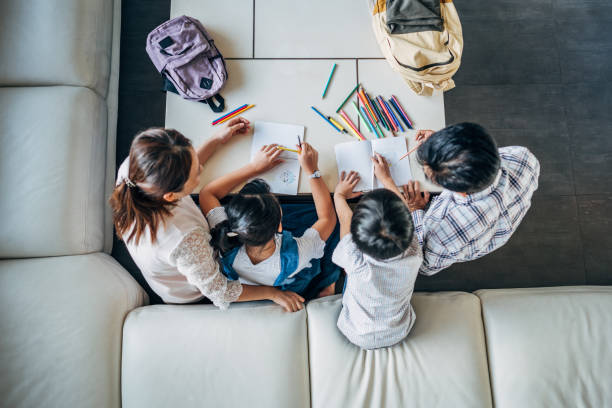

Cultivating Good Habits Through Daily Detail Management
Family education is not a grand, singular event but a continuous accumulation of daily details. The foundation of a child’s character is built upon the small, repetitive actions parents reinforce from a young age. By managing the minutiae of daily life, parents provide the structural support necessary for children to internalize discipline, responsibility, and self-regulation.
The Mechanism of Habit Formation
Habits are the automated responses to environmental cues. In a family setting, these cues are often established by parental routines. When parents model consistency, children naturally adopt these patterns as their own operating systems.
- Routine Consistency: Establishing fixed times for sleep, study, and play reduces decision fatigue in children.
- Micro-Tasking: Breaking down complex chores into manageable, small-scale actions prevents overwhelm and builds a sense of accomplishment.
- Positive Reinforcement: Focusing on the process rather than the outcome encourages a growth mindset, ensuring the child values the effort exerted in habit-building.

The Personality of Parents as the First Lesson
Often, parents view their own personalities as mere “background music” to the child’s development, but in reality, parental character is the primary curriculum. A child’s perspective on the world, their emotional intelligence, and their conflict resolution skills are mirrors of their parents’ internal states.
Why Parental Character Matters Most
Children do not learn from what we tell them; they learn from who we are. If a parent is volatile, the child learns volatility. If a parent is patient and analytical, the child learns to navigate challenges with grace.
| Parental Trait | Impact on Child Development |
|---|---|
| Emotional Stability | High resilience and lower anxiety levels. |
| Integrity | Strong moral compass and personal accountability. |
| Curiosity | Active pursuit of learning and problem-solving. |

Knowledge and Literacy as the Battery of Parenting
Parenting is an energy-intensive endeavor that requires constant refueling. Many parents mistake formal academic qualifications for parenting competence. However, true “parenting literacy” is the ability to interpret a child’s needs, understand psychological development, and adapt strategies accordingly.
Building Your Parenting Battery
Think of your parenting capacity as a battery that must be recharged through continuous learning. This involves reading, observing, and engaging in self-reflection to ensure your methods remain relevant to the child’s current developmental stage.
- Active Listening: Moving beyond hearing words to understanding the emotional subtext of a child’s communication.
- Continuous Education: Keeping updated with modern psychological insights to avoid outdated, punitive discipline models.
- Self-Awareness: Recognizing one’s own triggers to prevent projecting unresolved trauma onto the child.

Parents Psychological Quality: The First Line of Defense
The mental fortitude of a parent serves as the ultimate shield for a child. In an increasingly complex world, a parent’s ability to remain calm under pressure, maintain boundaries, and express unconditional support is the foundational element of a child’s internal security.
Strengthening Your Psychological Defenses
To protect your child from the chaotic external environment, you must first master your internal environment. This is achieved through deliberate psychological conditioning, such as mindfulness, stress management, and setting clear, firm boundaries that are communicated with empathy.
Frequently Asked Questions (FAQ)
- Q1: How can I start changing my child’s habits without creating conflict?
- Focus on changing the environment rather than directly controlling the child. Small, consistent adjustments to daily routines often lead to natural habit formation without the resistance that comes from overt pressure.
- Q2: Is my personality really the most important factor in my child’s growth?
- Yes. Children are observational learners. They internalize your problem-solving methods, emotional regulation, and social interactions, which become the baseline for their own behavior.
- Q3: How do I improve my “parenting literacy”?
- Prioritize reading developmental psychology resources, attending workshops, and engaging in regular self-reflection. View parenting as a skill to be practiced rather than an instinct that just happens.
- Q4: Why is parental psychological quality considered a “first line of defense”?
- Because a stable parent provides a secure base. When a parent manages their own stress effectively, the child feels safe and is better equipped to handle external challenges and emotional turbulence.